
Artificial intelligence is reshaping data center design, driving demand for faster networks and higher-performance computing platforms. While discussions often focus on 400G and 800G technologies used in large-scale AI training clusters, many AI deployments operate at a different scale. Enterprise AI platforms, inference environments, and departmental GPU clusters often require reliable connectivity without the complexity and cost associated with the highest-speed networks.
In these scenarios, 100G IR4 optical modules offer a practical solution. By combining 100G bandwidth, single-mode fiber connectivity, and support for medium-distance links, IR4 modules provide an attractive balance between performance, reach, and cost.
AI Infrastructure Is Not Always Built at Hyperscale
The rapid growth of AI has led many organizations to deploy GPU resources for model training, inference, analytics, and data processing. However, not every AI environment consists of thousands of GPUs connected through ultra-high-speed fabrics.
Many enterprises operate smaller GPU clusters designed for internal AI projects, machine learning applications, or edge AI workloads. These deployments typically require high-bandwidth connections between servers, storage systems, and network switches, but often do not justify the expense of large-scale 400G or 800G infrastructure.
For these organizations, 100G Ethernet remains a practical and widely adopted networking option.
Supporting GPU Server Connectivity
GPU servers generate substantial network traffic, especially when accessing shared datasets, exchanging model parameters, or communicating with storage resources.
A 100G IR4 module provides sufficient bandwidth for many of these workloads while maintaining low network complexity. It can be used to connect GPU servers to leaf switches, aggregation switches, or storage networks within the data center.
Compared to legacy 10G, 25G, or 40G environments, upgrading to 100G significantly improves throughput and helps reduce network bottlenecks that may limit AI application performance.
For organizations seeking a balance between capability and cost, 100G remains an attractive infrastructure choice, while reviewing claude code pricing can help teams budget the AI development layer alongside their infrastructure.
An Economical Alternative to LR4
When deploying single-mode optical links, network designers often evaluate both IR4 and LR4 technologies.
While LR4 modules support transmission distances of up to 10 kilometers, many AI deployments do not require such extended reach. Most links inside a data center are far shorter, typically connecting equipment within the same building or across nearby data halls.
In these cases, the additional reach provided by LR4 may offer little practical benefit.
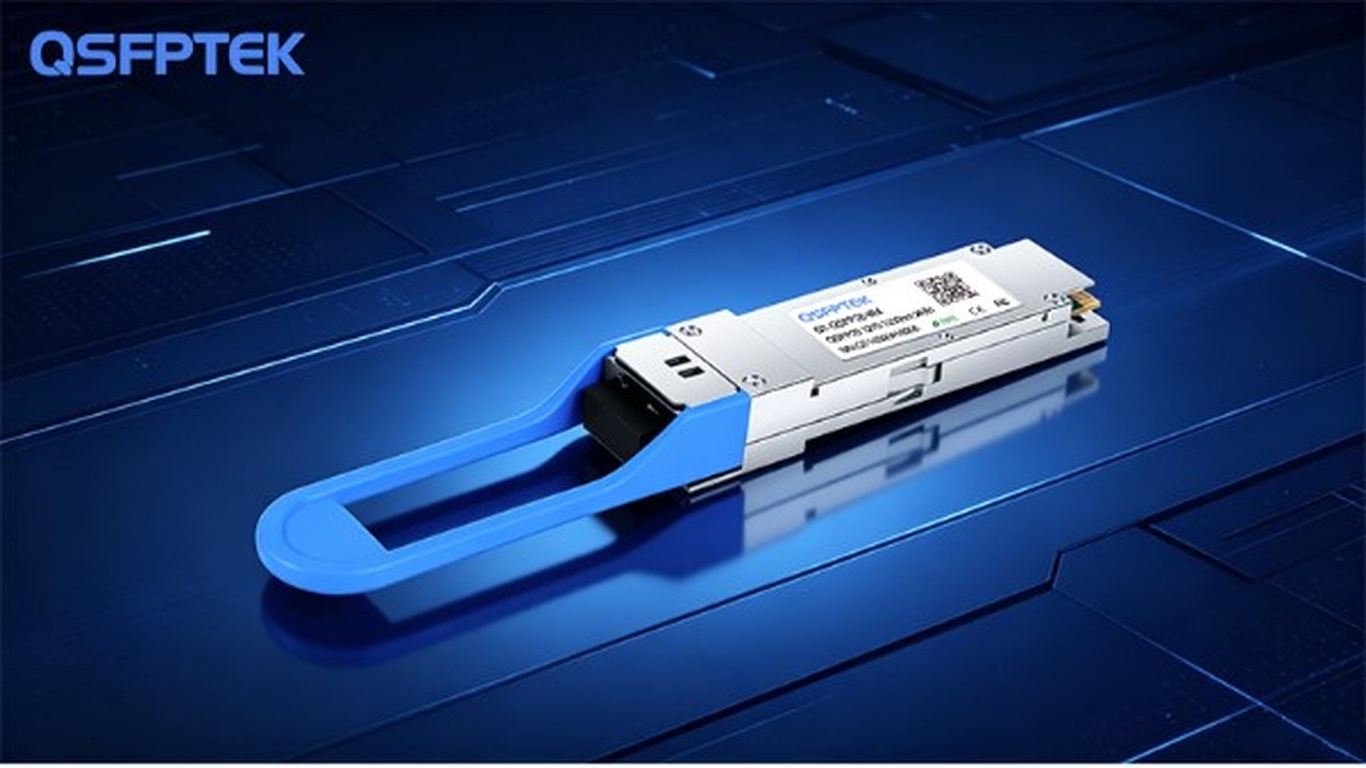
QSFP28 IR4 modules are designed for distances of up to 500 meters over single-mode fiber, making them well suited for internal data center connectivity. Because the optical requirements are less demanding than those of LR4, IR4 solutions often provide a more cost-effective option for short- and medium-distance deployments.
Ideal for Large Data Halls
As AI infrastructure grows, data centers frequently expand beyond a single row of racks. GPU servers, storage systems, and network switches may be distributed across multiple rooms or large data halls.
These environments often exceed the reach limitations of multimodal technologies while remaining well within the operating range of IR4 optics.
The 500-meter transmission capability of 100G IR4 provides network architects with greater flexibility when designing layouts and planning future expansions. Organizations can deploy equipment where it makes operational sense without being constrained by shorter-distance optical technologies.
Supporting Future Network Growth
Another advantage of 100G IR4 is its compatibility with single-mode fiber infrastructure. Many data center operators are increasingly adopting single-mode cabling because it supports future migration paths to higher-speed technologies.
Deploying IR4 today allows organizations to establish a modern fiber foundation that can continue supporting future upgrades as networking requirements evolve. The rapid adoption of AI tools is creating new demand for faster and more efficient data transmission. From AI chatbots to code generation platforms and data analytics tools, every AI service consumes and produces tokens that must be processed through powerful computing infrastructure. 400G and 800G optical modules support this growth by providing the high-capacity links needed in modern AI data centers. For network operators and cloud service providers, upgrading optical connectivity is not only about speed; it is also about improving AI service quality, reducing latency, and preparing infrastructure for future workloads.
Conclusion
Not every AI deployment requires the bandwidth of hyperscale training networks. For many enterprise AI environments, inference clusters, and departmental GPU platforms, 100G IR4 delivers the right combination of performance, reach, and affordability.