
The term music pulsamento might sound technical, but it’s actually something you already feel every time you listen to a song. Think about when you tap your foot or nod your head without even realizing it—that natural rhythm guiding you is what pulsamento is all about. It acts like the heartbeat of music, quietly keeping everything in sync. Without it, songs would feel messy and disconnected, almost like a story without structure. What makes this concept powerful is that it works both technically and emotionally. You don’t need to understand music theory to experience it—you just feel it naturally. That’s why both beginners and professionals are curious about it, because once you understand pulsamento, you start hearing music in a completely different way.
music pulsamento definition explained
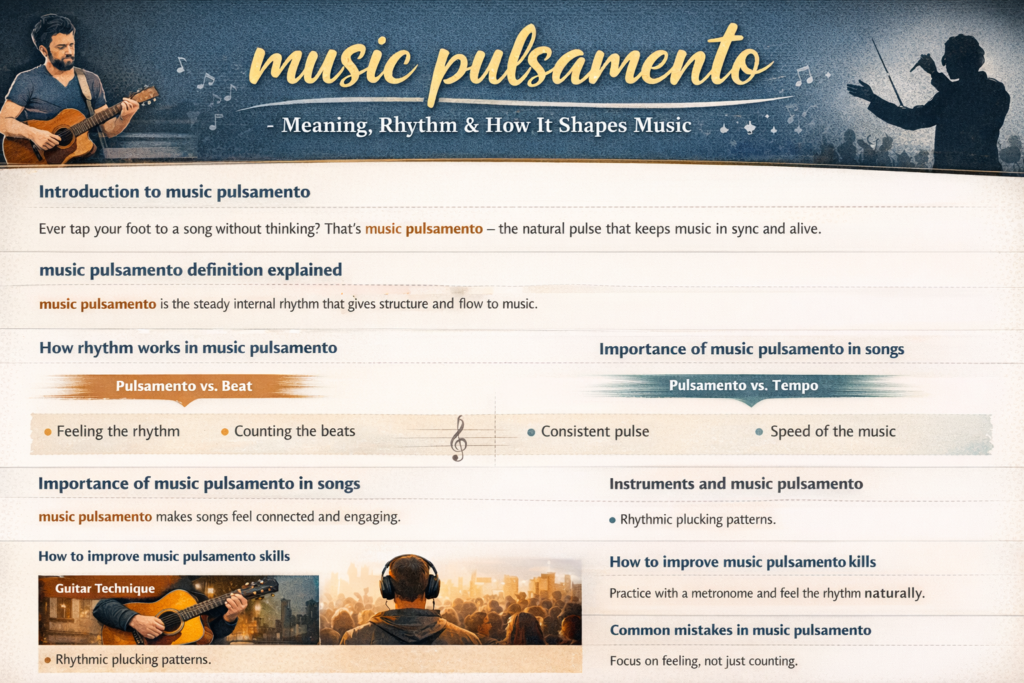
The idea of music pulsamento revolves around the steady pulse that runs underneath a piece of music. It’s not just the beat you count; it’s the internal rhythm that keeps everything flowing smoothly. Imagine a clock ticking in the background—that’s how pulsamento works, but in a musical sense. It gives structure to melodies and ensures that instruments stay aligned. Without this internal pulse, even the best compositions would sound chaotic. Musicians rely on this concept to maintain timing, while listeners connect to it emotionally. It’s subtle but essential, making it one of the core elements of how music functions.
The origin of music pulsamento
The term music pulsamento comes from words that mean “to pulse” or “to beat,” which perfectly describes its role. Historically, rhythm has always been part of human culture, from ancient drumming traditions to modern digital music. Even before formal music theory existed, people understood rhythm through movement and sound. Pulsamento is simply a refined way of describing that natural sense of timing. It shows how music is deeply connected to human instincts, making rhythm something we don’t just learn—we’re born with it.
How rhythm works in music pulsamento
Understanding music pulsamento helps you see how rhythm holds everything together in a song. It acts as a guide that keeps all instruments and vocals aligned. When musicians play together, they rely on this internal pulse to stay synchronized. Even when the music changes speed or intensity, the pulsamento remains consistent, acting like a foundation. This is what allows complex songs to still feel organized and enjoyable. It’s like having an invisible conductor guiding every note, ensuring harmony and balance throughout the performance.
Difference between pulsamento and beat
When comparing music pulsamento to a beat, the difference becomes clear. A beat is something you can count, while pulsamento is something you feel. The beat gives structure, but pulsamento gives life. Without that feeling, music would sound mechanical, lacking emotion and depth.
Difference between pulsamento and tempo
Another important distinction in music pulsamento is how it differs from tempo. Tempo is the speed of the music, while pulsamento is the consistency of the rhythm. You can change tempo, but the sense of pulse remains essential for keeping everything together.
Importance of music pulsamento in songs
The role of music pulsamento in songs cannot be ignored because it directly affects how music is experienced. It provides stability, making songs easier to follow and more enjoyable to listen to. Whether it’s a slow emotional track or a fast dance beat, pulsamento ensures everything stays connected. It’s what allows listeners to predict rhythm and stay engaged with the music.
music pulsamento in different genres
Different styles of music use music pulsamento in unique ways, but the core idea remains the same. It adapts to the mood and style, making each genre feel distinct while still maintaining rhythm.
Classical music use
In classical compositions, music pulsamento often works subtly, guiding complex arrangements without being obvious. It keeps orchestras synchronized, even during intricate performances.
Modern music use
In modern music, music pulsamento is often stronger and more noticeable, especially in pop and electronic genres. It drives the energy and keeps listeners engaged.
Emotional effect of music pulsamento
One of the most interesting aspects of music pulsamento is how it influences emotions. A slow pulse can feel calming, while a fast one can create excitement. This connection between rhythm and feeling is what makes music so powerful. It’s not just sound—it’s an experience that affects mood and energy.
Instruments and music pulsamento
Different instruments bring music pulsamento to life in their own way, contributing to the overall rhythm of a song.
Guitar technique
In guitar playing, music pulsamento often comes through plucking patterns that create a steady flow of sound. This technique adds both rhythm and texture.
Drums and rhythm
Drums naturally highlight music pulsamento, acting as the backbone of most songs. They make the pulse clear and easy to follow.
Why musicians focus on music pulsamento
For musicians, mastering music pulsamento is essential because it ensures timing and coordination. Without it, performances can fall apart, no matter how skilled the players are. It’s the foundation that supports creativity and expression.
How to improve music pulsamento skills
Improving music pulsamento requires practice and awareness. Musicians often use tools like metronomes, but the key is to develop a natural feel for rhythm. Listening carefully and practicing consistently can make a huge difference.
Common mistakes in music pulsamento
Beginners often struggle with music pulsamento because they focus too much on counting instead of feeling the rhythm. This can make their playing sound stiff. The solution is to relax and let the music flow naturally.
Conclusion
The beauty of music pulsamento lies in its simplicity and importance. It’s the invisible force that keeps music alive, connecting rhythm, emotion, and structure into one seamless experience. Once you understand it, you’ll never listen to music the same way again.
FAQs
1. What is music pulsamento?
music pulsamento is the internal rhythmic pulse that keeps music structured and flowing.
2. Is music pulsamento the same as beat?
No, music pulsamento is the feeling of rhythm, while a beat is something you count.
3. Why is music pulsamento important?
music pulsamento helps keep music organized and emotionally engaging.
4. Can beginners learn music pulsamento easily?
Yes, with practice and listening, understanding music pulsamento becomes natural.
5. Does music pulsamento affect emotions?
Yes, music pulsamento can influence mood, energy, and how music feels overall.